What Rent Control Means If You're Renting Out a Room in San Francisco
A lot of landlords think "my place isn't covered by rent control" means "I can end this arrangement whenever I want." That's usually wrong. Rent control and eviction rules are two different things, and mixing them up is exactly where landlords get surprised.
This is general information, not legal advice for your specific situation. The SF Rent Board offers free counseling if you want a definite answer for your exact case.
Two separate questions, not one
There are really two questions here, and they have different answers. First: does San Francisco's rent control law apply to your building at all? Second: does your specific renter have a right to stay unless you have a real reason to ask them to leave? A "no" to the first question does not automatically mean "no" to the second one too — that mix-up is where most of the confusion happens.
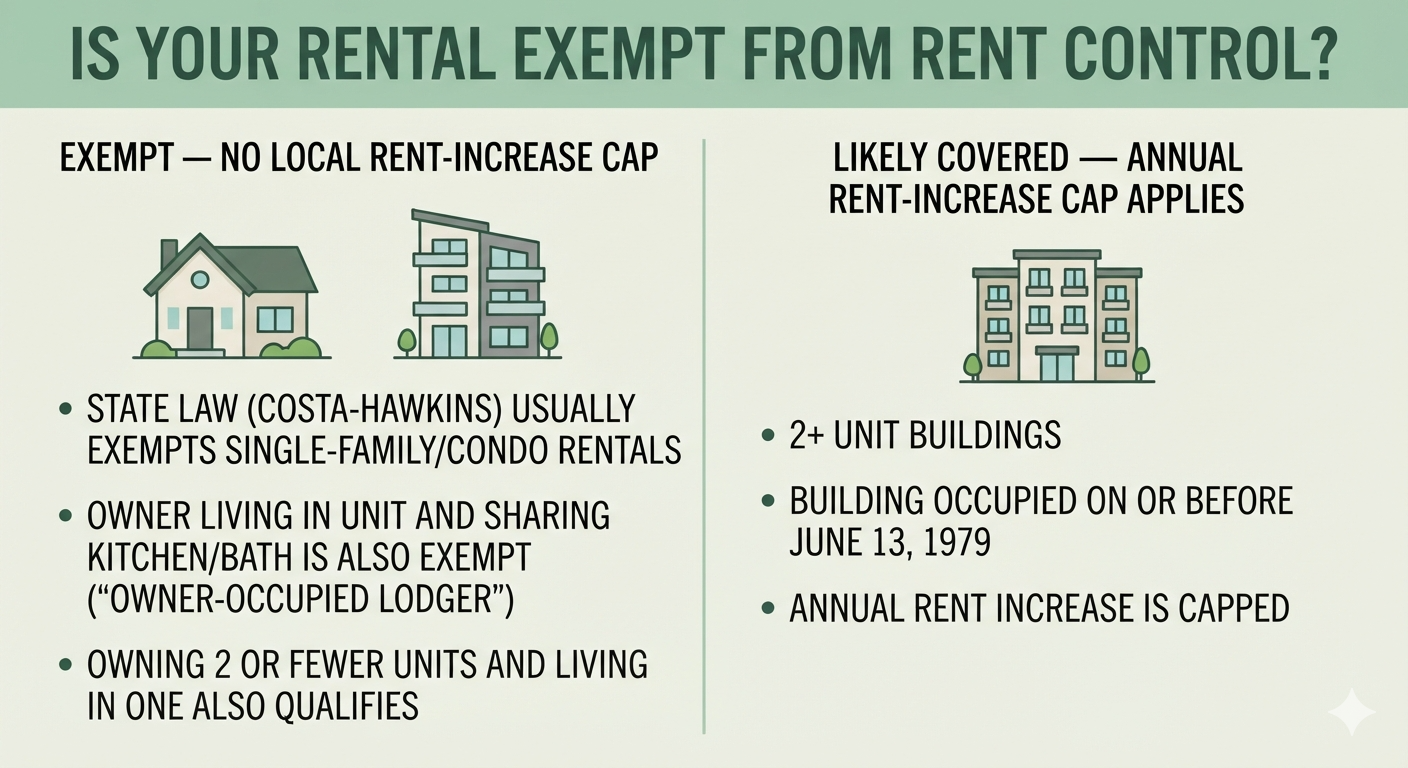
Is your rental exempt from rent control?
San Francisco's rent control law covers buildings with 2 or more units that existed on or before June 13, 1979. For those buildings, there's a limit on how much rent can go up each year. Most spare-room rentals don't fall into that category, though:
- If you're renting out a room in a single-family house or a condo, state law (called Costa-Hawkins) usually exempts you from local rent control.
- If you live in the home yourself and share a kitchen or bathroom with your renter, you're exempt too — this is called the "owner-occupied lodger" exemption.
- Same thing if you own two units or fewer and live in one of them yourself.
If any of these sound like your situation, you're very likely exempt from rent control. That's only half the story, though.
Being exempt from rent control does not mean no protections
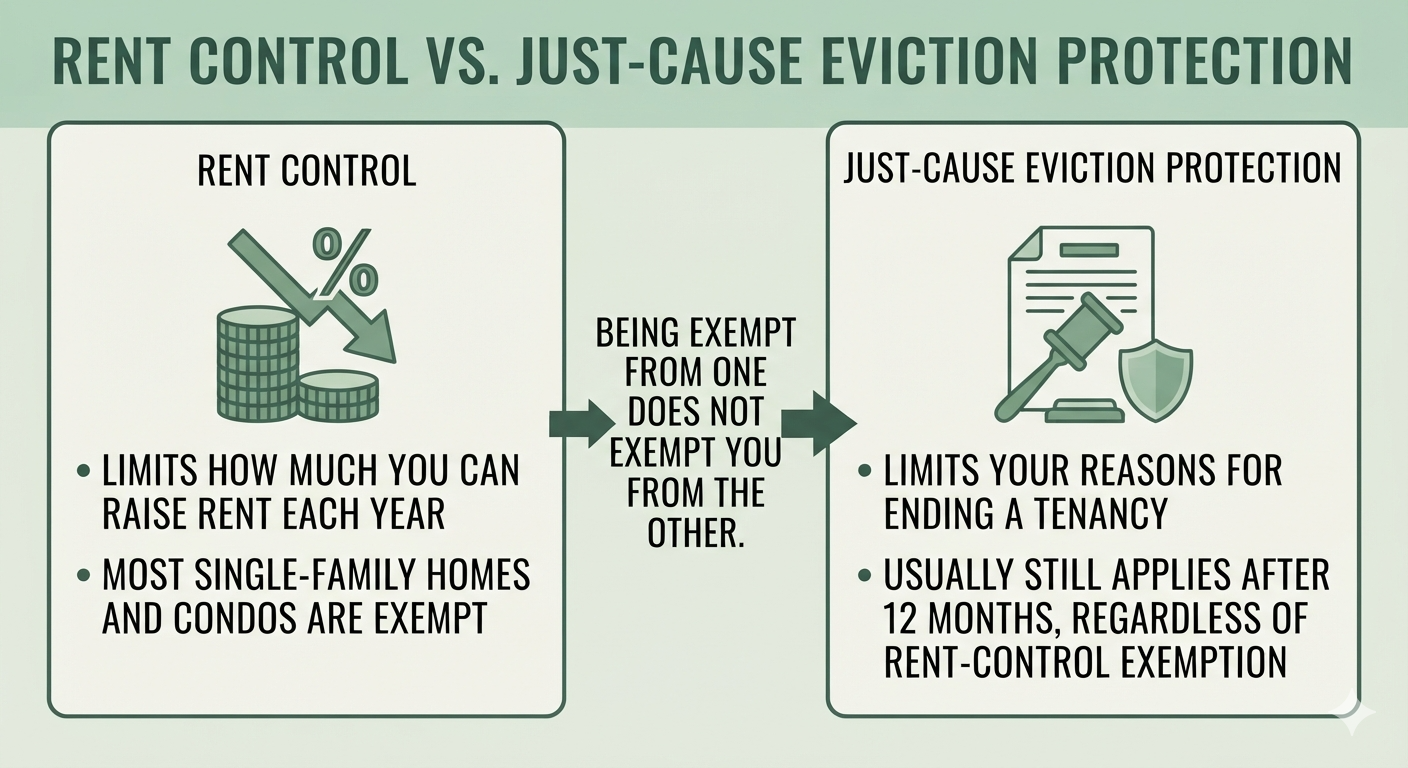
Here's the part that catches people off guard: even if you're exempt from rent control, you usually still can't ask someone to leave for just any reason once they've lived there 12 months or more. This is a separate rule called "just-cause eviction protection," and it's not the same law as rent control. Being exempt from one doesn't mean you're exempt from the other.
There's one extra wrinkle for roommate situations: if your tenant moves in and then adds a roommate partway through their first year, everyone in the home usually needs to reach the 12-month mark together before just-cause protection kicks in — or one person needs to have lived there 24 months. So don't assume a brand-new roommate resets the clock in your favor. It doesn't work that way.
If you take on a roommate under your own lease
If you rent your own place and then bring in a roommate, the law treats you as that roommate's landlord — even though you're renting too. In legal terms, you're the "master tenant" and your roommate is the "subtenant."
That means you can't ask your roommate to leave without a real reason, like unpaid rent or serious problems, unless you did one specific thing before they moved in: gave them something in writing saying their living situation would not have just-cause protection.
Two things have to be true for that to count. It has to be in writing, and it has to happen before they move in. Telling them out loud doesn't count. Adding it to the lease after they've already moved in doesn't count either. This rule comes from SF Rent Board Rule 6.15C(1) — if it applies to you, don't write this yourself. Talk to a landlord-tenant attorney or contact the Rent Board directly. Getting the wording wrong isn't just risky; it can mean the whole disclosure doesn't count at all.
Ready to start screening? See how Key works.
If you want help with this part
Key doesn't give legal advice. But when you set up a listing, it reminds you to check whether you've handled the written disclosure above before finalizing a roommate arrangement — a reminder, not a legal opinion. You're still the one responsible for getting the paperwork right.