Red Flags: How to Spot a Bad Roommate Applicant
You've asked the right questions and the answers are coming back — but one of them feels slightly off, and you're not sure if you're overreacting or catching something real. This is that gap: the specific patterns that actually predict a bad arrangement, not just a vague feeling.
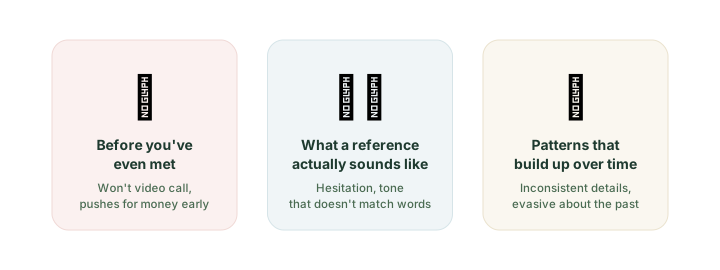
Before you've even met
These are the closest thing to a hard rule in this post — patterns scammers use before any money or lease is real, not judgment calls about someone's personality:
- They won't do a video call or an in-person walkthrough before asking for money — the single most common tell across rental scam reports.
- They push to send a deposit or first month's rent before you've signed anything together.
- They overpay you and ask you to send back the difference — a classic overpayment scam, not generosity.
- Their ID photo doesn't match the person you're talking to, or the name on it doesn't match what they've told you — always check government ID in person, every time, no exceptions for someone who "seems normal."
What a bad reference actually sounds like
A reference rarely says "don't rent to this person" outright — most people are reluctant to say something negative directly, even when it's true. What you're actually listening for is more subtle:
- Hesitation before answering a direct question about on-time rent or lease compliance — even a small pause is worth a follow-up.
- A tone that doesn't match the words — someone saying "they were fine" without any warmth or detail usually means less than it sounds like.
- Vague, generic answers to specific questions — a real landlord can usually tell you something concrete; someone posing as one often can't.
- Before you weigh anything they say: confirm they're actually who they claim to be. A quick look at county property tax records for the address they say they managed can confirm ownership — catches an applicant who listed a friend as a fake landlord reference.
Patterns that build up over the conversation
Some flags don't show up in any single message — they only show up once you compare messages against each other:
- Details about their story change between messages — a move-out date, a reason for leaving, a job title that shifts slightly each time.
- They're specifically evasive about references or their current living situation, as distinct from just being a brief texter — the difference is whether they answer other questions fully and only go quiet on this one.
- Slow or unresponsive most of the time, but suddenly quick to reply the moment something benefits them — a move-in date, a lower deposit — which shows the slowness was selective, not just how they communicate.
- Urgency coming from their side — pressure to decide fast, sign fast, or send something before you've had time to think it through.
None of these are disqualifying on their own. A single flag is a reason to ask more, not to say no.
So how many flags is too many?
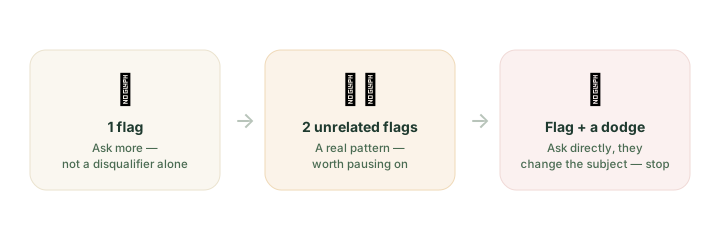
One flag alone is just a prompt to ask a follow-up question — plenty of good applicants have one odd answer or an imperfect reference. Two unrelated flags together is a real pattern worth pausing on before you move forward. But the strongest single signal isn't the flag itself — it's what happens when you ask about it directly. Someone who answers, even awkwardly, is usually fine. Someone who changes the subject, gets defensive, or goes quiet when you ask a direct follow-up is telling you something a form answer never could.
Ready to start screening? See how Key works.
If you want help with this part
Key asks every applicant the same intake questions, so you get comparable answers side by side instead of whatever each person happened to volunteer — and it flags inconsistencies across the conversation instead of you having to hold every detail in your head. You still read the answers and decide; Key just makes sure nothing gets missed because you were three messages deep and lost track.