How to Rent Out a Room for the First Time
Most advice about renting out a room starts at "how do I screen applicants" — but there's a stage before that most first-timers skip past without realizing it matters: actually deciding how you're doing this and what your listing needs to say before anyone messages you at all.
Which arrangement applies to you
Are you the owner adding someone to your own lease or deed, or are you yourself renting the home and subletting a room in it? Different rules apply either way, and they matter enough that they deserve their own space rather than a quick aside here.
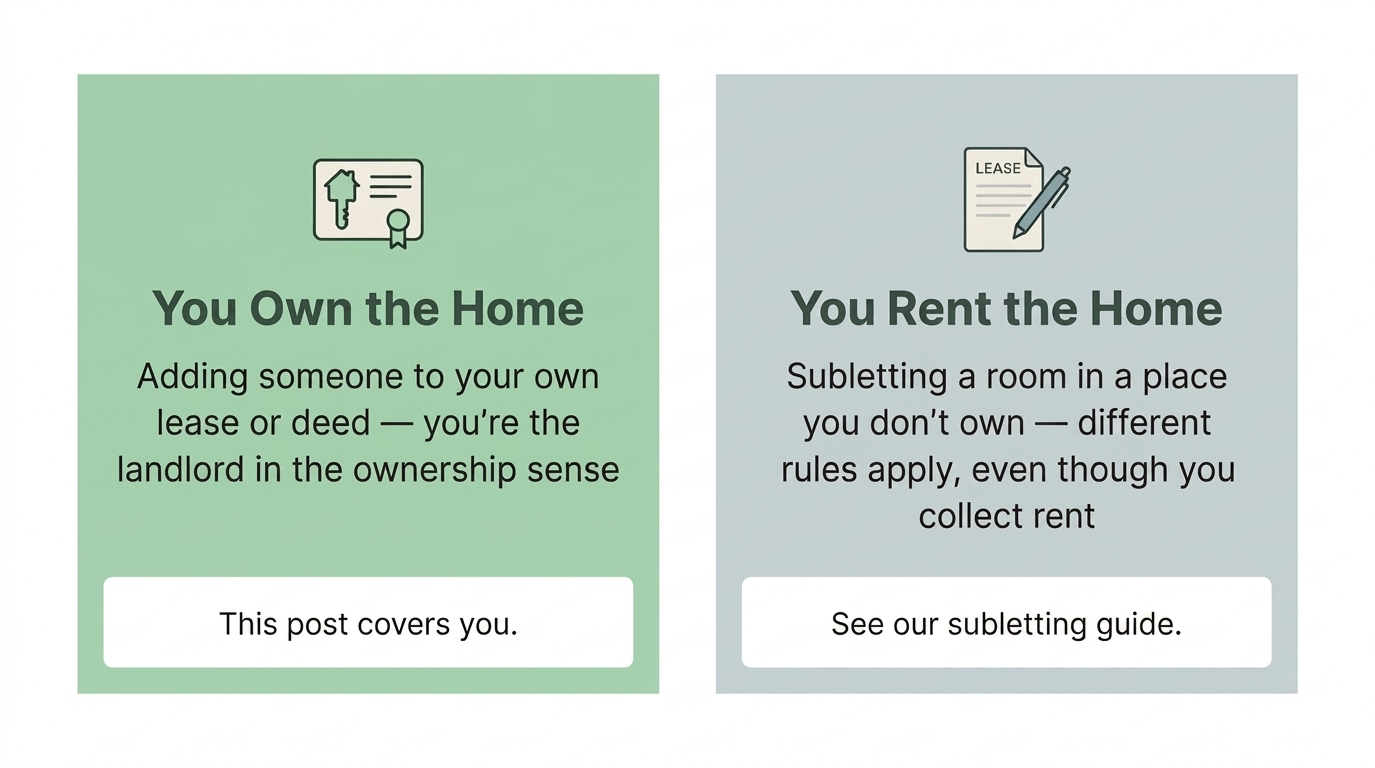
This post covers the owner side. If you're renting the home yourself, the mechanics are different enough that they're covered in a separate guide: Subletting a Room You Rent: What You Need to Know Before You Do It.
What your listing actually needs
Before you post anything, get these on the table:
- Rent amount, and whether utilities are included or split separately
- Lease term and move-in date
- What's shared and what's private — the specific room, and access to shared spaces like the kitchen or living room
- House rules worth stating upfront: guest policy, pets, quiet hours — so you're not negotiating them one at a time in someone's DMs later
- Photos and a straightforward description — you don't need a professional shoot, just enough for someone to picture the space
Getting these settled before you list means you'll move faster once messages start coming in, and you'll come across as someone who has their act together — which is exactly the impression that attracts good applicants.
Where to actually post it
If you're leasing out the entire home rather than a single room, Zillow is a strong channel — but that's not where room-specific traffic actually is. For a single room, Facebook groups — often organized by neighborhood, school, or industry — are one of the most active channels in the Bay Area right now. Craigslist is the old classic and still surprisingly active for rooms and shares. SpareRoom is worth checking too, as a dedicated roommate-finder platform with its own verification features. Posting in more than one place at once is normal and doesn't cost you anything but a bit of repeated typing.
A realistic timeline
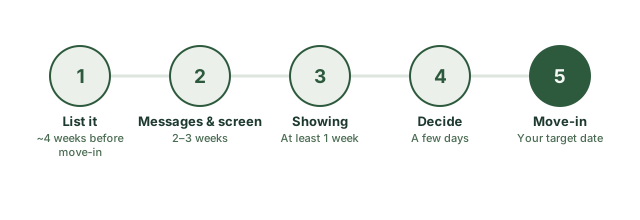
In the Bay Area's hot market, a conservative plan is to list about 4 weeks ahead of your target move-in date — enough room to actually test the waters instead of scrambling. Start with messages and initial screening as responses come in, giving that 2–3 weeks since that's genuinely how long it takes to run reference checks and have real conversations rather than rushing. Spare at least a week for in-person showings before taking a few days to actually decide — in practice, showings often happen alongside messaging and screening rather than strictly after it, so treat this as a general flow to budget time around, not a rigid sequence. If you're holding a high bar for who you let in, this timeline can easily run longer, and that's fine — rushing it to fill the room faster is usually where regret shows up later.
Once you're done with everything above, How to Screen a Roommate Before They Move In picks up from there.
Ready to start screening? See how Key works.
If you want help with this part
Key doesn't write your listing for you, but once you're ready to start hearing from applicants, it runs the same intake process for everyone who responds — so the moment you're done with everything above, Key picks up from there.